Gaming Chair vs. Office Chair: Which Is Actually Better for Your Back?
Gaming chairs and ergonomic office chairs serve different purposes. Here's what the design differences mean for your posture, comfort, and long-term back health.
We may earn a commission if you buy through our links.
What to Look For
The honest answer depends entirely on how you use your chair. Gaming chairs and office chairs are built around different assumptions. Understanding those assumptions helps you avoid buying the wrong thing.
Design Philosophy: Two Different Bodies in Mind
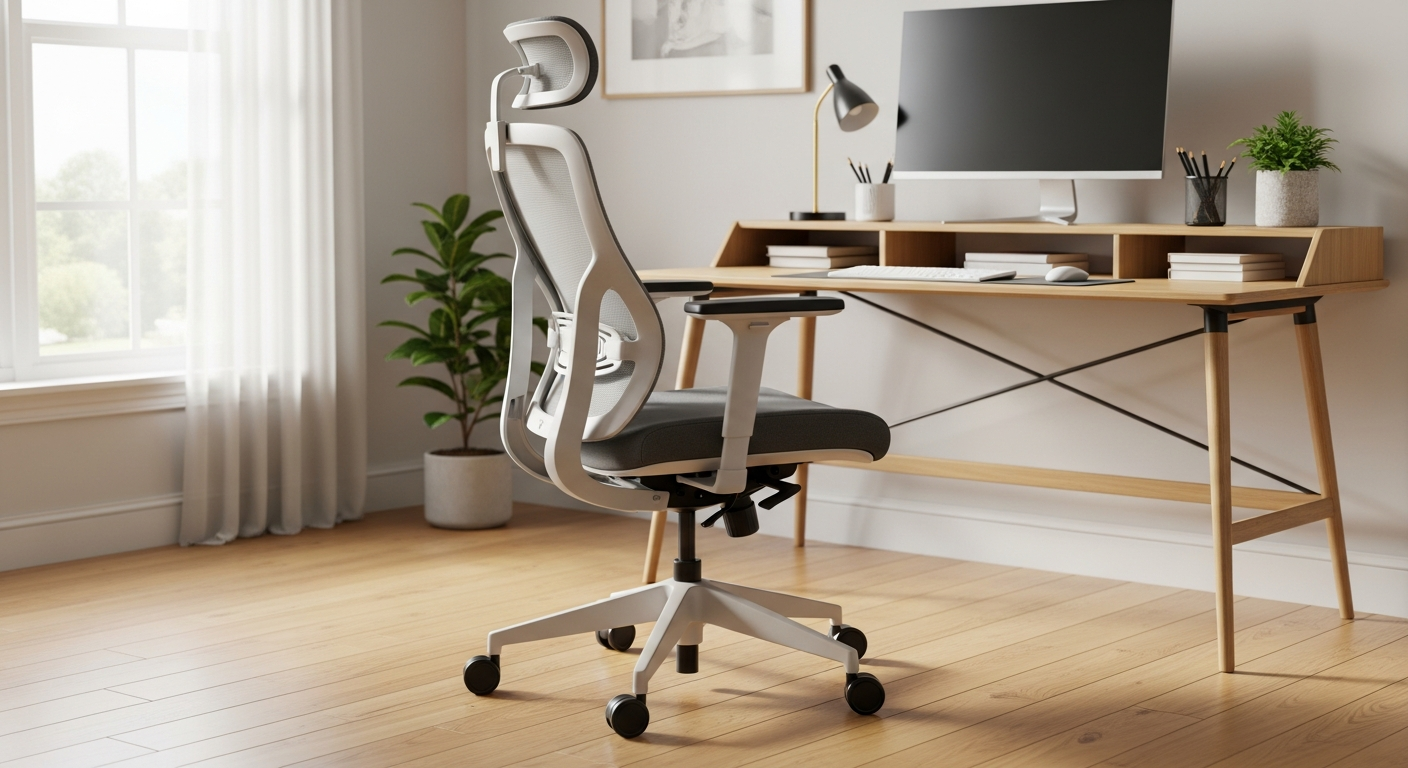
Ergonomic office chairs are designed for upright, forward-facing work. The goal is to keep your spine in a neutral curve while you type, read, and interact with a screen. Features like adjustable lumbar support, seat depth, and tilt tension all serve that goal.
Gaming chairs are built around a different posture: slightly reclined. The inspiration is the bucket seat used in racing cars. That seat cradles a driver who needs lateral support during movement. Sitting at a desk, you don’t need lateral support. You need lumbar support and hip clearance.
Neither design is inherently wrong. They’re optimized for different positions. The problem arises when you try to do eight hours of office work in a chair built for two-hour gaming sessions.
Lumbar Support: A Real Difference
This is where the gap is most significant.
A quality ergonomic office chair offers height-adjustable lumbar support. You move it up or down until it sits exactly at your lumbar curve. Some chairs, like the Herman Miller Aeron, add support at the sacrum. That precision matters. The wrong lumbar height is worse than no lumbar support.
Most gaming chairs provide a removable lumbar pillow on a strap. The pillow sits somewhere on your lower back. You can adjust it slightly by moving the strap up or down. But pillows compress over time and often shift position as you move. They also push your spine slightly forward rather than supporting its natural curve from behind.
The exception is the Secretlab TITAN Evo, which includes an adjustable lumbar system with both height and depth control. It’s not as refined as a dedicated ergonomic chair, but it’s considerably better than a strap pillow.
Seat Depth and Hip Movement
Bucket seats on gaming chairs have a raised front lip and raised side bolsters. These features work well when you’re reclined. Your body sinks into the seat and the bolsters hold you in place.
Sitting upright, those same features create problems. The raised front lip can press into the back of your thighs, restricting circulation. The side bolsters prevent natural hip shifting, the small weight redistributions that happen constantly during long sitting sessions.
Ergonomic office chairs typically have flat or slightly contoured seat pans. The best ones include seat depth adjustment, letting you slide the seat forward or back to match your leg length. This keeps pressure off the back of your knees and keeps your back in full contact with the lumbar support.
Material and Heat
Most gaming chairs use PU leather or fabric over foam. Leather-style materials look good and clean easily, but they trap heat. After two hours, a leather gaming chair is warm. After four, it’s hot.
Ergonomic office chairs often use mesh backs. The mesh allows air to circulate. Heat and moisture dissipate rather than building up. For long work sessions, mesh is more comfortable for most people.
Secretlab’s NEO Hybrid Leatherette is better than standard PU leather at breathability. But it still retains more heat than a mesh back. If you run warm, this matters.
Where Gaming Chairs Win
Gaming chairs do several things well. They recline further, often to 165 degrees or more. That’s genuinely comfortable for watching video or gaming. Ergonomic office chairs typically recline to 120-130 degrees.
Gaming chairs also handle extended reclined sessions better. If you watch movies, play console games, or do anything that puts you in a reclined position for hours, the bucket seat and side bolsters earn their keep.
Build quality at the entry level also differs. A $300 gaming chair from a recognized brand typically looks and feels more substantial than a $300 no-name office chair. The materials are more attention-grabbing. That’s a real advantage if appearance matters to your setup.
The Dual-Use User
Many people work and game at the same desk. The question of which chair to buy is real.
If your breakdown is more than 60% work, choose an ergonomic office chair. Chairs like the Branch Ergonomic Chair Pro recline adequately for gaming. The ergonomic benefits for work outweigh any gaming comfort gap.
If your breakdown is more than 60% gaming and your sessions are long and reclined, a gaming chair from a quality brand like Secretlab is appropriate. Just accept that upright work for more than four hours will be less supported.
If you split time evenly, the Secretlab TITAN Evo is the best compromise. Its lumbar system is the most office-worthy of any gaming chair. It costs $519, more than most gaming chairs. That premium buys you a chair that doesn’t force you to choose.
Bottom Line
Office chairs win for sustained upright work. The lumbar adjustability, seat depth, and mesh backs are designed for the body position that productivity requires.
Gaming chairs win for reclined sessions, looks, and value at the entry level.
The mistake is buying a gaming chair for a work-primary setup because it looks better in photos. Your back will tell the difference within a week.
Frequently Asked Questions
- Are gaming chairs bad for your back?
- Gaming chairs aren't inherently bad, but most are designed for comfort while reclined, not upright productivity. The bucket seat design restricts hip movement. If you sit upright for work, most gaming chairs lack the lumbar adjustability to properly support your spine.
- Why do gaming chairs have side bolsters?
- Side bolsters are the raised padded sides that cradle your body. They're designed for comfort while gaming in a reclined position. During upright work, they can restrict natural hip movement and push your posture slightly forward.
- Is the Secretlab chair good for office work?
- The Secretlab TITAN Evo is one of the better gaming chairs for office use. It has an adjustable lumbar pillow, cold foam cushioning that holds shape longer than standard foam, and a wide range of recline. It's not as ergonomically refined as a Herman Miller, but it's usable for 6-8 hour workdays.
- What should I choose if I both game and work at my desk?
- If you work more than you game, buy an ergonomic office chair. Most ergonomic chairs recline enough for gaming sessions. The reverse isn't true: most gaming chairs don't support upright work well enough for long sessions.