Best Webcams for a Desk Setup in 2026: 4K, Auto-Framing, and Budget Picks
The best webcams for a desk setup in 2026, led by the Insta360 Link 2. Covers 4K sensors, gimbal auto-framing, lighting, mounting, and a budget pick.

Quick picks: Insta360 Link 2 (best overall) | Logitech MX Brio (best 4K for work calls) | Elgato Facecam 4K (best for streaming) | Opal Tadpole (best portable) | Logitech C920 (best budget) | Obsbot Tiny 2 (best AI tracking alternative)
We may earn a commission if you buy through our links.
A webcam is the one desk item everyone on the other end of the call sees. Most people buy the wrong one for the wrong reason: they pay for 4K and skip the lighting. This guide covers what actually improves your image, and the six cameras worth buying in 2026. The Insta360 Link 2 is the best overall pick because it pairs a good 4K sensor with a physical gimbal that follows you around the room, at a price that no longer stings.
What to Look For
Sensor size, not resolution. Video platforms compress your feed to 1080p or lower. What survives compression is how clean the image was to start with, and that comes down to sensor size and lens aperture. A larger sensor at 4K handles a dim room far better than a small sensor at the same resolution.
Lighting matters more than the camera. A $60 webcam in good light beats a $300 webcam in a dark room. If your face is lit by the monitor alone, fix that first. A monitor light bar like the BenQ ScreenBar Halo 2 lights your desk and, with its front-facing mode, your face. A small key light like the Elgato Key Light Mini on a corner of the desk does the job more directly. Either is cheaper than most 4K webcams.
Auto-framing type. Gimbal cameras physically pan and tilt to track you. Fixed cameras crop a 4K frame digitally to simulate the same thing, which drops resolution as they zoom. Gimbal tracking is better; digital is fine if you stay seated.
Mounting. Most webcams clip to the top bezel. That works on a normal monitor at eye level. On an ultrawide, a tall monitor, or a monitor on an arm, a small tripod or a clamp mount lets you place the camera where the angle is flattering.
Software. Logi Tune, Elgato Camera Hub, and the Insta360 and Obsbot apps let you lock exposure and white balance. Locking those once removes the flicker and color drift you get with auto everything.
Best Overall: Insta360 Link 2
The Insta360 Link 2 costs around $199 and is the camera to buy if you want one webcam to cover calls, presenting, and the occasional stream.

Insta360 Link 2
$199.99 on Amazon (as of Sep 24, 2026) · Price and availability may change. Read our review
It records 4K with a 1/2-inch sensor and phase-detect autofocus that locks on quickly when you hold something up to the lens. The 3-axis gimbal pans and tilts to follow you, and it does so smoothly rather than in the jerky steps you see on cheaper trackers. Gesture controls let you start and stop tracking and zoom without touching the mouse.
Insta360 added better noise-cancelling mics and a wider tracking range over the original Link. The app is where you set tracking speed, framing, and exposure. The Link 2 also comes in a Link 2C variant without the gimbal for less money if you never need tracking.
Best 4K for Work Calls: Logitech MX Brio
The Logitech MX Brio is around $199 and is the cleanest fixed 4K webcam for people who live in Zoom and Teams.

Logitech MX Brio
$199.19 on Amazon (as of Sep 24, 2026) · Price and availability may change. Read our review
Logitech moved to a larger sensor than the old Brio 4K, and the difference shows in low light: less noise, more accurate skin tones. It records 4K at 30fps or 1080p at 60fps. A physical privacy shutter twists over the lens. Show Mode tilts the camera down to share a document on your desk, which is more useful than it sounds.
Logi Tune handles exposure, white balance, and field of view, and it saves settings to the camera so they persist across apps. The MX Brio is a fixed camera with digital framing only. If you stay seated, that is not a limitation.
Best for Streaming: Elgato Facecam 4K
The Elgato Facecam 4K is built for people who want manual control and a clean signal into OBS. Expect around $200; check current pricing.

Elgato Facecam 4K
$179.99 on Amazon (as of Sep 24, 2026) · Price and availability may change. Read our review
Elgato’s approach is to skip in-camera compression tricks and give you uncompressed video plus full manual control in Camera Hub. You set ISO, shutter speed, and white balance like a real camera, and the settings are saved to the device. The Facecam 4K is the newer, less expensive sibling of the Facecam Pro. Elgato lists 4K at up to 60fps; verify frame rate and sensor specs on the current listing before buying.
There is no gimbal and no built-in microphone on Elgato Facecams. Streamers pair it with a dedicated mic, so that omission is deliberate. For a video-call-only user it is a less convenient choice than the MX Brio.
Best Portable: Opal Tadpole
The Opal Tadpole is the smallest camera on this list, roughly the size of a large thumb, and around $150 to $175; check current pricing.
Opal Tadpole
Prices change often. Check today's price on Amazon.
It is designed for laptops. The clip grips a thin laptop lid, the cable is short and USB-C, and there is a tap-to-mute touch control on the cable itself. The 4K sensor is large for the body size and produces a noticeably better image than any built-in laptop camera. It also works at a desk on a monitor with a normal clip.
The Tadpole is Mac-first. Windows support exists but the software has lagged behind. If you switch between a laptop at the coffee shop and a monitor at home, it is the one camera that suits both.
Best Budget: Logitech C920
The Logitech C920 is still the default budget webcam more than a decade after launch. Around $60 to $70; it goes on sale often.
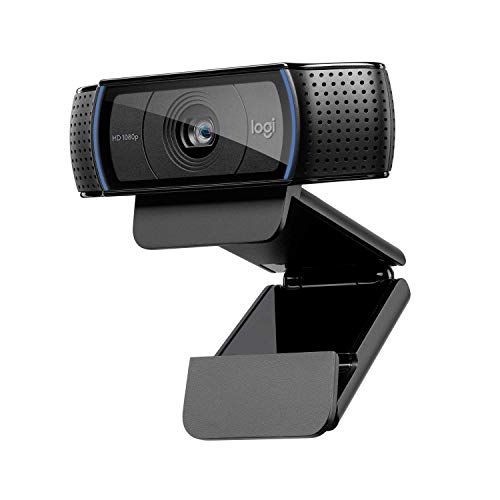
Logitech C920
$67.39 on Amazon (as of Sep 24, 2026) · Price and availability may change. Read our review
It records 1080p at 30fps with a fixed field of view and autofocus. In good light it looks fine. In bad light it looks like a 2012 webcam, which is what it is. Pair it with a light bar and most people on your call will not know the difference.
If you can spend around $130, the Logitech Brio 505 adds a wider sensor, a privacy shutter, and Show Mode, and is a meaningful step up while still under the price of the 4K cameras above. Check current pricing on both; the gap changes with sales.
Best AI Tracking Alternative: Obsbot Tiny 2
The Obsbot Tiny 2 is the other gimbal 4K camera worth considering, at around $300 to $330; check current pricing.
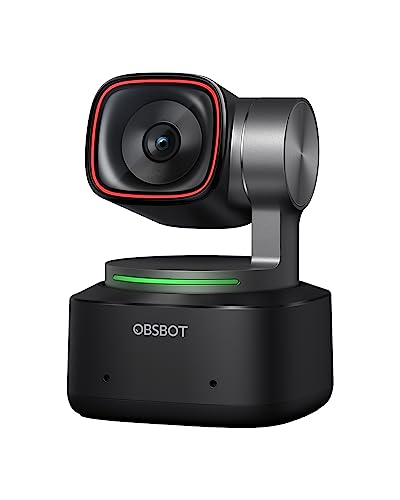
Obsbot Tiny 2
$299.00 on Amazon (as of Sep 24, 2026) · Price and availability may change.
It uses a 1/1.5-inch sensor, larger than the Link 2’s, so it holds up better in dim rooms. Tracking is fast, gesture control works reliably, and Obsbot’s app includes voice commands and preset framing positions. There is also a Tiny 2 Lite at a lower price with a smaller sensor.
Against the Link 2, the Tiny 2 costs more and its software is a bit busier. If low-light performance is your main problem and you still want a gimbal, this is the one. Otherwise the Link 2 gets you most of the way for less.
What to Skip
Skip no-name 4K webcams under $50. They use tiny sensors, often interpolate to 4K from a lower native resolution, and the image is worse than a C920. Skip buying any webcam before fixing your lighting; you may not need the upgrade. And skip ring lights mounted behind the camera unless you like the reflection in your glasses.
Bottom Line
The Insta360 Link 2 is the best webcam for a desk setup in 2026. Good 4K, real gimbal tracking, and a price that makes it an easy upgrade from whatever came with your laptop.
If you never leave your chair on calls, the Logitech MX Brio is the cleaner fixed camera. If you stream, the Elgato Facecam 4K and Camera Hub give you control the others lack. And if you spend $60 on a C920 and $100 on a light, you will look better than most people spending $300 on a camera alone.
Recommended Gear
Products we've reviewed that fit this guide. We may earn a commission if you buy through our links.


Frequently Asked Questions
- Do I need a 4K webcam for video calls?
- Not for the call itself. Zoom, Teams, and Meet compress most streams to 1080p or lower. A 4K sensor still helps because it gives the camera extra pixels for digital zoom and framing, and larger 4K sensors tend to handle low light better. Buy for sensor quality, not the resolution number.
- Why does my webcam look grainy even though it is 4K?
- Lighting. Small webcam sensors need a lot of light, and a dim room forces the camera to raise gain, which adds noise. A monitor light bar or a small key light in front of you fixes this faster than a more expensive camera. Fix light first, then upgrade the webcam if you still need to.
- Is auto-framing worth paying for?
- If you move during calls, present at a whiteboard, or share a desk with someone, yes. Gimbal cameras like the Insta360 Link 2 and Obsbot Tiny 2 physically pan and tilt to follow you. Digital auto-framing on fixed cameras crops the image instead, which costs resolution. For a seated user who stays still, it is a nice-to-have.
- Should I mount the webcam on the monitor or on an arm?
- Monitor mounting is fine for most people and keeps the camera at eye level on a properly positioned monitor. An arm or small tripod helps when your monitor is very tall, when you use an ultrawide, or when you want the camera slightly above eye level for a more flattering angle.
- Which webcam software is best?
- Logitech's Logi Tune and Elgato's Camera Hub are the most polished. Both let you set exposure, white balance, field of view, and zoom, and save those settings to the camera. Insta360 and Obsbot have their own apps with tracking and gesture controls. Using the software once to lock exposure prevents the flicker and drift you see with defaults.
Related Guides

How to Set Up a Home Office in 2026: The Complete Guide
A step-by-step guide to setting up a productive home office in 2026. Covers location, desk choice, ergonomics, lighting, and internet setup.

Best Monitor Light Bars in 2026: BenQ vs. Baseus vs. Xiaomi
The best monitor light bars in 2026 compared. BenQ ScreenBar, ScreenBar Halo, Baseus, and Xiaomi options tested for brightness, glare, and build quality.

Best Desk Accessories in 2026: The Ones That Actually Improve Your Setup
The best desk accessories in 2026 that make a real difference to your workspace: monitor light bars, desk mats, cable management, and more.

How to Reduce Eye Strain at Your Desk: Lighting, Monitors, and Habits
Practical steps to reduce eye strain at your desk setup: monitor settings, lighting placement, display distance, and screen time habits.
Setup Inspiration
All setups →
Budget Home Office Setup Under $600: Full-Time Remote Work
A complete home office setup for full-time remote work under $600. Covers desk, monitor, keyboard, and webcam for video calls without cutting corners on what matters.
Total: $564

Walking Pad and Standing Desk Setup for Active Work Days
A walking pad treadmill under-desk setup paired with a standing desk for active work sessions. Built for remote workers who want to move while they work. Total cost: $1,430.
Total: $1,430

Corner Desk Setup That Maximizes Every Inch of Space
An L-shaped corner desk setup that uses every inch of available space with dual monitors, a built-in drawer unit, and clean cable routing. Total cost: $1,460.
Total: $1,460